

Field terminology

Genius loci
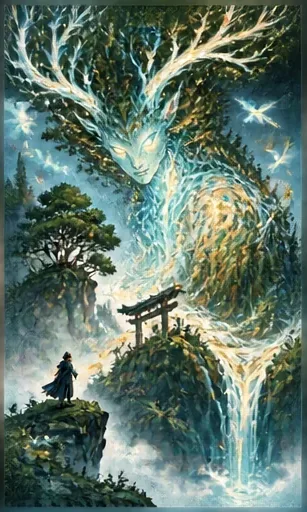
The spirit or presiding intelligence associated with a place or waterway.
Story context
The spirit or presiding intelligence associated with a place or waterway. Choose a reading route to explore the setting in context.
Genius loci: a spirit of place
First reading stop: Rivers of London introduces a world in which figures associated with the Thames can be spoken to. For the term itself, the licensed roleplaying game’s glossary is the clearest short source: it defines genii locorum as spirits of place and gives genius loci as the singular. That game definition helps orient a reader, but it should not be mistaken for a line quoted from the first novel.
A spirit of place is a useful starting idea because it ties a supernatural figure to somewhere recognisable. In this series, the river world is the most immediately visible example for a newcomer. The idea should not be flattened into “every waterway has the same sort of character”. A mapped river, a fictional personification and a specific person’s relationship to a place are different claims. The books reveal those relationships through cases and conversations rather than presenting an exhaustive list at the door.
Peter Grant’s first encounter with magic arises while he is doing police work, according to the author and publisher descriptions of the opening novel. That matters for this term. A place can contain people, traces, competing accounts and evidence; it can also be represented within the fiction by a supernatural figure. Peter’s investigation still has to ask what happened and how it can be known. The term gives readers a category for comparison, not a shortcut to an answer.
How the books and game describe it
The licensed game makes some vocabulary explicit so players can share a setting. Its glossary provides the singular and plural forms. The novel’s description, by contrast, frames the river figures as part of Peter’s developing case. This guide keeps those uses separate. When we use genius loci, we mean a spirit linked to a place in the setting; we are not claiming that every individual follows identical rules of origin, power or territory. Those details require the relevant published story.
Chaosium’s later game material mentions a genius loci associated with the River Lea in the synopsis of an adventure. That is evidence of how the licensed game uses the term, not proof that the same adventure happened in the novels. This difference is especially important when searching online: a book description, a comic synopsis and a tabletop scenario can all share a world without describing the same event.
Key connections
Mama Thames and Father Thames are useful first-book links for thinking about a waterway and its fictional social world. Beverley Brook connects a smaller, real tributary to a character guide. Peter Grant gives the reader an investigator’s viewpoint, while the Folly provides a workplace for such encounters. These links are orientation, not a complete classification of all supernatural beings.
Real London behind it
The rivers on our map are waterways. The spirits are fictional. The Port of London Authority describes the tidal Thames as a real river running through central London and out towards the estuary. Its account is appropriate for a geographic claim, not for a claim about a character. Conversely, a publisher’s synopsis can establish a fictional encounter without serving as a hydrological survey. This distinction is the editorial rule behind the map and these world files.
Readers may also meet the Latin phrase outside fiction. Here it is used as vocabulary supplied by the licensed game, with a clear source. This profile does not import unrelated folklore as if it were a rule written by Aaronovitch. A specific place can matter for different reasons in different books; follow the story rather than turning a glossary entry into a universal plot explanation.
Through Broken Homes · possible spoilers
Once you have finished four novels, compare the book-one river negotiations with later encounters that are tied to particular places. Ask whether the place itself, the being associated with it and Peter’s knowledge of it remain easy to separate. This is a reading exercise; it does not assert that a particular later character fits a rigid taxonomy.
Through Lies Sleeping · possible spoilers
The more locations the series explores, the less helpful a single London-centred shorthand can become. Review each instance on its own terms. When a guide labels something a genius loci, check whether that label comes from a novel, a comic, or the licensed game, and whether the source actually uses those words.
Current with the main novels · possible spoilers
After Stone and Sky, revisit the question of place at a broader scale. The contrast between Peter’s London training and other settings can be discussed without assuming every place has an identical spirit. This is our interpretive comparison, not an official rulebook amendment.
Sources and scope
Chaosium’s licensed-game glossary defines the term · Author’s first-book premise supports the Thames figures · Chaosium’s game-adventure announcement gives the Lea example · Port of London Authority supports real-river context. The game and novels are distinguished throughout.
Related files
Story world index · River map · Forma · Vestigia · Signare