

Place file

The Folly
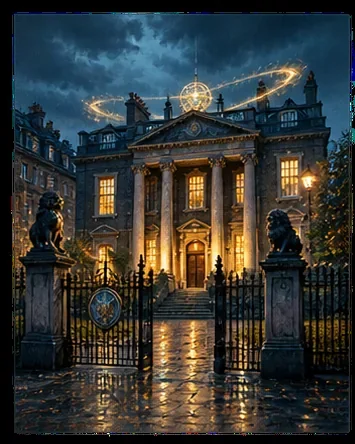
The specialist Metropolitan Police base for cases involving magic and the uncanny.
Story context
The specialist Metropolitan Police base for cases involving magic and the uncanny. Choose a reading route to explore the setting in context.
The Folly: a place, a team and a method
First reading stop: Rivers of London. The publisher’s description introduces Peter Grant’s encounter with a ghost and his recruitment by Thomas Nightingale. The author’s account names Nightingale as the last wizard in England when Peter meets him. This is the safest point from which to understand the Folly: Peter is a police officer learning a new kind of work, not a visitor entering an ordinary London landmark.
The Folly is the series’ fictional base for police work involving magic. It gives unusual investigations an institutional address in the story, even when the details of a case lead Peter across the city. The name can mean the building, the people who work there, or their way of doing things. Those senses overlap, and the reader should notice which one a passage needs. A statement about what “the Folly” knows may refer to an individual’s knowledge rather than an omniscient organisation.
That distinction matters because the books repeatedly place practical investigation beside magical apprenticeship. Peter can ask questions, compare accounts and follow ordinary evidence while also learning from Nightingale. The attraction of the setting lies partly in its scale: a specialist unit has to respond to a city much larger than itself. This is our reading of the premise, rather than a claim about the staffing of a real police department.
How the books describe it
The opening novel’s official description starts with Peter’s witness statement and Nightingale’s attention, then places him in a London where river divinities and other uncanny events coexist with police work. Read the Folly through that sequence. Its importance is not simply that magic exists inside its walls; it is the meeting point for an apprentice’s questions and a mentor’s accumulated practice. The licensed Rivers of London roleplaying game calls the Folly the Metropolitan Police’s special magic branch. The game is a useful explanation of its setting, but game procedures should not be silently treated as rules established in every novel.
People and relationships
Peter Grant and Nightingale are the clearest starting pair. Their different experience levels make the place legible to a new reader: Peter must learn enough to investigate, and Nightingale has to decide what to teach and when. The wider team changes over the series, so a list of everyone ever associated with the Folly would reveal later developments. Follow the individual character guides after reaching the relevant book instead of assuming the opening arrangement persists.
Real London behind it
The Folly is a fictional institution and should not be used as a visitor address. London’s streets and river form a real backdrop, but this guide’s illustrations and map do not pinpoint a police building. Our self-guided walk covers public places connected with the series; it does not lead to a supposed Folly entrance. Separating the real city from a fictional workplace makes the books’ use of recognisable geography more interesting, and avoids sending a reader to a made-up destination.
Through Broken Homes · possible spoilers
After four main novels, compare Peter’s growing confidence with the institution that trained him. When an investigation moves beyond its base, ask which habits of the Folly travel with him: careful observation, consultation with Nightingale, and the limits of what the team can verify. This is a reading prompt, not a claim that an incident happens inside the building. Read the fourth-book guide after finishing that novel.
Through Lies Sleeping · possible spoilers
At this point in the sequence, the Folly can be read as a changing network rather than a fixed room. Compare how earlier and later cases use expertise, trust and the separation between an individual decision and an institutional position. The seventh-book guide offers the corresponding reading position without making this opening section carry its spoilers.
Current with the main novels · possible spoilers
After Stone and Sky, return to the first book and ask what the Folly has come to mean beyond Peter’s first apprenticeship. The series can broaden its settings without losing the question of how a specialist team learns, records and shares knowledge. This is an editorial interpretation; later books may alter it.
Sources and scope
Author’s first-book description · UK publisher’s first-book description · Licensed game’s Folly description. The comparisons and reading questions above are this site’s commentary. The game is identified separately from the novels.
Related files
Story world index · River map · Covent Garden · The Thames · Soho