

Person · spoiler-light

Alexander Seawoll
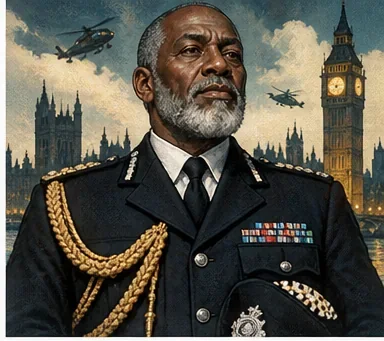
Senior Metropolitan Police officer whose cases increasingly intersect with the Folly.
Story context
Senior Metropolitan Police officer whose cases increasingly intersect with the Folly. Choose a reading route to explore the setting in context.
Alexander Seawoll: a police institution in person
Detective Chief Inspector Alexander Seawoll is a senior Metropolitan Police figure whose investigations repeatedly intersect with the Folly. A particularly valuable primary source is Ben Aaronovitch's 2025 interview with the London Borough of Havering: the author identifies Seawoll as the one character based on a real person, a friend who died while the first book was being written. This is a statement about the origin of a fictional character, not permission to identify, depict or invent biographical details about the friend. It gives readers a concrete reason to treat Seawoll as more than a stock obstructive superior. The novel remains the source for what the fictional inspector says and does.
Seawoll's institutional position changes the kind of questions Peter Grant must answer. A young officer can pursue an unusual lead, but somebody with responsibility for a wider investigation has to consider personnel, evidence, time and credibility. Magic may offer a hypothesis without automatically producing a report another officer can act on. Read a meeting between the Folly and ordinary police for the difference between explaining a phenomenon and managing a case. The second is not a dull obstacle to the first; it is part of the moral and professional setting of a police story. This is our critical interpretation of his role, not a purported summary of a specific conversation.
A long-running series benefits from a colleague who knows the police organisation beyond the Folly's rooms. A specialist unit is only one part of a larger force, and the wider force is made of people who may have good reasons to demand proof. Seawoll can make that pressure visible without being reduced to a single attitude toward the supernatural. An outsider to Peter's private training may ask an ordinary procedural question that exposes a real gap in a wizard's explanation. Conversely, specialist knowledge can reveal why an ordinary account is incomplete. Tension between those forms of knowledge creates drama without requiring one side to be foolish.
The author's interview describes Seawoll's personality in vivid terms, but a fan guide should not copy its language into an unsourced list of fixed traits. Follow the main novel sequence and notice how the working relationship changes as Peter gains experience. First impressions can be strong while still leaving room for later context. If you want the broader police network, compare the profiles of Sahra Guleed, Miriam Stephanopoulos and Jaget Kumar. Each brings a different job or institution to an uncanny case.
Seawoll is a reminder that supernatural fiction still needs ordinary human accountability. The opening Rivers of London case establishes Peter's police identity before his apprenticeship. The later books let readers see how that identity sits within a department and a chain of responsibility. Our interpretation of Seawoll as a figure of institutional pressure is offered for discussion, not as an official character note. The verifiable point from the interview is the author's statement about inspiration; the specific history of the person who inspired him is not ours to fill in.
Primary source: Havering interview with Ben Aaronovitch.
Related files
Characters · Casebook · Mama Thames · Father Thames · Lady Tyburn